Independent directory — we compare Charleston water damage companies; we don't do the work ourselves.
Quick answer
Sewage in your home is a Category 3 “black water” loss — contaminated with bacteria, viruses and parasites — and the rule is simple: everything porous it touched comes out, everything else gets disinfected, and it is not a DIY job. Professional sewage cleanup in Charleston typically costs $5,000–$15,000+ depending on affected area, because demolition, sanitizing and disposal dwarf a standard dry-out. Common Charleston triggers: sewer line backups, septic failures, and storm or king-tide flooding that overwhelms aging downtown lines.
Tell us what happened — we'll connect you with Charleston-area restoration help right away. Free, no obligation.
Call (803) 910-601824/7 — speak with a local specialist now.
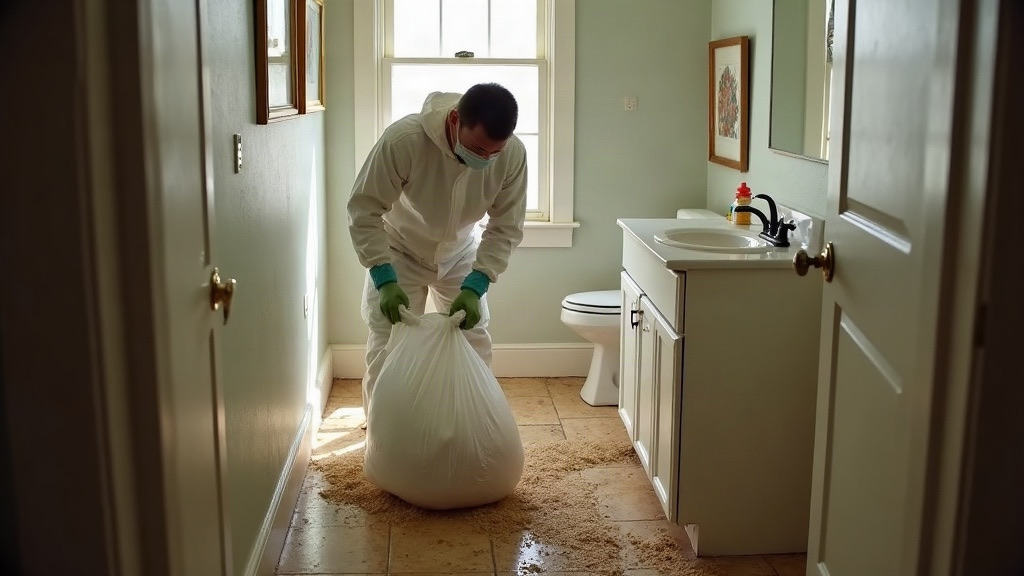
Restoration pros classify water three ways. Category 1 is clean — supply lines, sink overflows. Category 2 is gray — appliance discharge, washing machines, water that's sat long enough to pick up contaminants. Category 3 is black: sewage, septic backflow, toilet overflows beyond the trap, and — critically for Charleston — any floodwater that came in from outside. Storm surge, tidal flooding and yard water that crosses your threshold is treated as Category 3 by default, because there's no way to know what it washed through.
Category 3 water carries E. coli, salmonella, hepatitis A and a cast of parasites. Skin contact, and especially inhalation of dried aerosolized material, are genuine health hazards — which is why the standard of care (IICRC S500/S520) requires removal of porous materials rather than cleaning them, and why "I bleached it myself" jobs keep industrial hygienists busy.
Municipal line backups. Parts of the peninsula's sewer infrastructure are over a century old. Heavy rain — and especially rain that coincides with high tide, when the outfalls are submerged — can push the system backward into ground-floor drains and toilets.
Your own lateral line. The pipe from your house to the street is yours. Root intrusion, collapse in older clay or cast-iron laterals, and flushable-wipe clogs send sewage back through the lowest drain in the house — usually a ground-floor shower or the washing machine standpipe.
Septic systems. Much of Johns Island, Ravenel, Hollywood and the rural edges of the metro run on septic. Saturated drain fields after long rains cause exactly the backup pattern homeowners blame on the city.
Storm flooding. Hurricane and king-tide water entering the home is automatically Category 3. If a named storm puts six inches in your living room, the cleanup scope is the sewage scope, whatever the water looked like.
Because demolition and disinfection dominate the scope, sewage cleanup runs $5,000–$15,000+ for most residential losses — versus $1,200–$5,000 for the same footprint of clean water. A single bathroom caught early can come in lower; a whole ground floor after a storm event goes higher. Add the rebuild (drywall, flooring, trim) as a separate contract. Full price tables: Charleston water damage costs.
Insurance note: standard homeowners policies often exclude sewer backup unless you've added a water/sewer backup endorsement — typically cheap, and worth having in a city with tidal drainage. Flood-caused contamination falls under flood insurance (NFIP or private), which is a separate policy entirely. Check both before hurricane season.
Ask three questions before the truck rolls. First: "Is this classified Category 3, and what does that mean you're removing?" — the answer should mention porous-material demolition without prompting. Second: "What disinfectant do you use, and is it EPA-registered?" Third: "Who verifies it's clean before rebuild?" — on jobs of any size, third-party clearance is the honest answer.
Every company on our Charleston restoration comparison handles contaminated-water losses; locals like Disaster Plus and Patriot Restoration list biohazard and sewage work explicitly. Phones and service areas are on the companies page, and if the backup is active right now, the emergency page has the first-30-minutes checklist.
Not safely beyond the smallest toilet-overflow-on-tile scenario. Sewage is Category 3 water: it contaminates porous materials invisibly, dries into inhalable particles, and requires EPA-registered disinfectants and proper disposal. The health risk and the near-certainty of missing contamination make professional cleanup the standard of care.
Most residential jobs run $5,000–$15,000+ because contaminated porous materials (carpet, drywall, insulation) must be removed rather than dried, and everything else disinfected. The rebuild is a separate contract. Insurance coverage depends on a sewer-backup endorsement or flood policy — check yours.
Only if you carry a water/sewer backup endorsement — it's excluded from standard policies. The endorsement is inexpensive and, in a low-lying coastal city with aging lines, one of the better insurance values available. Flood-related contamination requires separate flood insurance.
Yes. Any water that entered from outside — storm surge, king tide, yard flooding — is Category 3 by default because its path is unknown. "The water looked clean" doesn't change the classification or the cleanup scope.
A backwater valve on your lateral line is the single best defense for ground-floor homes in flood-prone areas. Beyond that: don't flush wipes, keep trees off the lateral's path, scope older clay or cast-iron lines every few years, and maintain septic systems on schedule.
Speak with a local specialist 24/7 — we'll connect you with Charleston-area restoration help. Free, no obligation.