Independent directory — we compare Charleston water damage companies; we don't do the work ourselves.
West Ashley, SC · Charleston metro · Updated September 2026
Quick answer
West Ashley is the metro's textbook case for drainage flooding: the Church Creek basin has flooded neighborhoods repeatedly during extreme rain — the October 2015 flood is the modern benchmark — and broad stretches of the area sit in FEMA AE zones. For everyday losses (burst pipes, water heaters, appliance lines), prices track the metro: $1,200–$5,000 for a standard dry-out and $5,000–$15,000+ for contaminated or storm-related losses, per national cost data compiled September 2026. Companies covering West Ashley: our verified Charleston list.
Price ranges are compiled from national cost guides as of September 2026, adjusted for typical Lowcountry scope. Every loss is priced on site; treat these as orientation, not quotes.
Tell us what happened — we'll connect you with Charleston-area restoration help right away. Free, no obligation.
Call (803) 910-601824/7 — speak with a local specialist now.
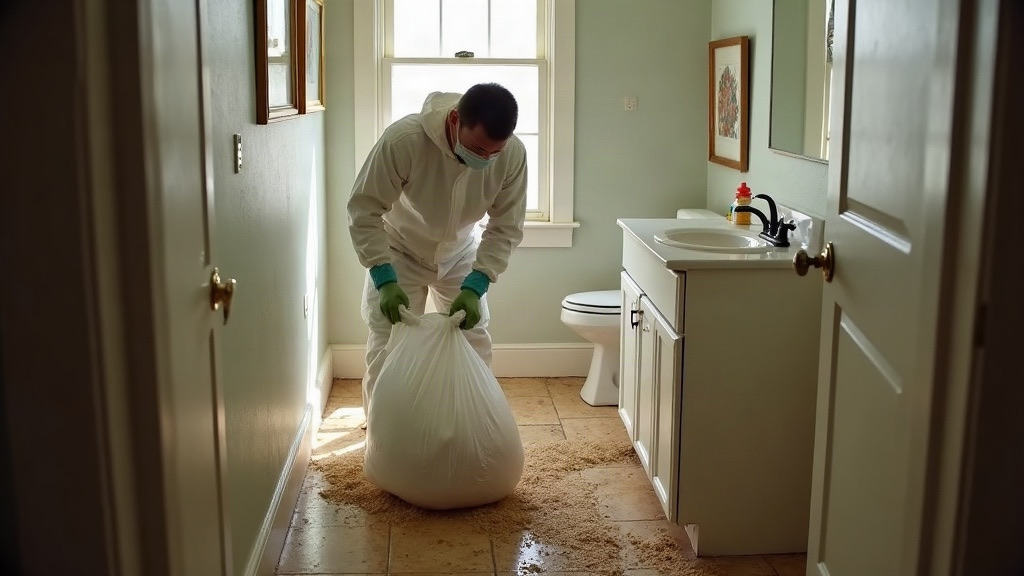
West Ashley — everything across the Ashley River from the peninsula — is Charleston's original post-war suburb. Byrnes Downs and the streets off Savannah Highway went up in the 1940s–50s, Avondale and the Sam Rittenberg corridor filled in through the 60s–70s, and newer construction continues toward Bees Ferry and Carolina Bay. The typical home is a one-story ranch on a crawl space or slab, with older pockets on raised foundations and the newest subdivisions slab-on-grade.
Restoration-wise, West Ashley jobs split three ways: sudden clean-water plumbing losses in aging systems, storm-driven flood losses in the low-lying basins (a Category 3 scope — see our sewage and contaminated water page), and the chronic crawl-space moisture that Lowcountry soil delivers everywhere. A quote for anything beyond a small clean-water loss should state explicitly which of these you're dealing with — they price very differently.
West Ashley's defining water risk is drainage, not tide. The Church Creek basin drains a large share of the area, and when extreme rain arrives — October 2015 being the benchmark — the creek and its tributaries overtop into neighborhoods that aren't on anyone's mental flood map. Many streets that flooded in 2015 and in events since sit outside the highest-risk FEMA lines.
Two consequences worth knowing. First, if you're in or near the basin, flood insurance is a decision to make deliberately, not a box to skip — homeowners policies exclude rising water from outside entirely, and NFIP policies carry a 30-day waiting period. Second, after a basin-wide event every restoration company in the metro dispatches into the same neighborhoods at once: call early, get on a schedule, and be skeptical of out-of-state trucks that appear only after storms.
West Ashley is central to most companies' dispatch maps — every firm on our verified Charleston list covers it. The questions that matter here: "Is my loss clean water or flood water, and how does that change what you remove?" — the Category 1 vs Category 3 answer drives the whole scope — and "did you inspect the crawl space?" for the area's thousands of mid-century ranch homes.
Company comparison with published phones: Charleston water damage companies ranked. Price orientation: what restoration costs in Charleston.
West Ashley matches metro pricing: $1,200–$5,000 for a standard extraction and dry-out on a typical home, per national cost data (September 2026). Storm flooding from the Church Creek basin is a Category 3 scope at $5,000–$15,000+ because contaminated porous materials are removed, not dried. Crawl-space work adds $1,500–$6,000.
Yes — West Ashley's benchmark flood (October 2015) came from extreme rain, not a hurricane. The Church Creek basin drains a large share of the area, and slow, intense storms overtop it into surrounding neighborhoods. Hurricane season adds surge and wind-driven rain on top, but drainage flooding is a year-round risk during heavy rain events.
No — rising water that enters from outside is flood, excluded from standard homeowners policies regardless of whether it came from a creek, a overwhelmed drain, or ponding rain. Coverage requires a separate flood policy (NFIP or private), and NFIP carries a 30-day waiting period. Sudden plumbing failures inside the house are the covered scenario.
Under the house. In a crawl-space ranch, a musty smell strongest at floor level or when the HVAC starts usually means moisture or mold in the crawl space, pulled up by stack effect. A flashlight trip to the crawl-space hatch — looking for standing water, fallen insulation and a torn vapor barrier — plus one professional moisture assessment will tell you whether you need a drying crew or just a new vapor barrier.
Speak with a local specialist 24/7 — we'll connect you with Charleston-area restoration help. Free, no obligation.